
Technology
Seal the line.
Hold the pressure.
A remotely operated, double-block-and-monitor isolation tool that seals a pipeline from the inside, minimizing blowdown, flaring or drain-down, with no excavation at the isolation site and nothing welded to the pipe.
A different way to isolate a line
Minimal product loss.
No hot tap.
No freeze plug.
Rampart’s tool seals the line from the inside, so the job gets done without the legacy isolation methods that cost product, time or long-term integrity.

Minimizes blowdown, flaring & drain-down

No hot tap & line stop

No freeze plugging
Same job, two ways.
Traditional
Blowdown, flaring or drain-down
Time →↓
Example: 20-mile, 20-inch gas line at 1,200 psi. Pipeline work not to scale; actual durations vary by job.
The pipeline work takes the same time.
What changes is the work around it. The tool is pigged in and out while product is still flowing, so blowdown, flaring, drain-down, refilling and repressurizing are kept to a minimum.
Back in service in nearly half the time.
Isolate against a known barrier, or between two tools that hold line pressure on both sides of a section, whether it’s feet or miles long.
The isolation tool
Configured in modules, controlled from the surface.
The tool is a train of connected modules that travels through the pipeline, sets at the planned isolation point and is operated from above ground. Its configuration is matched to each job.
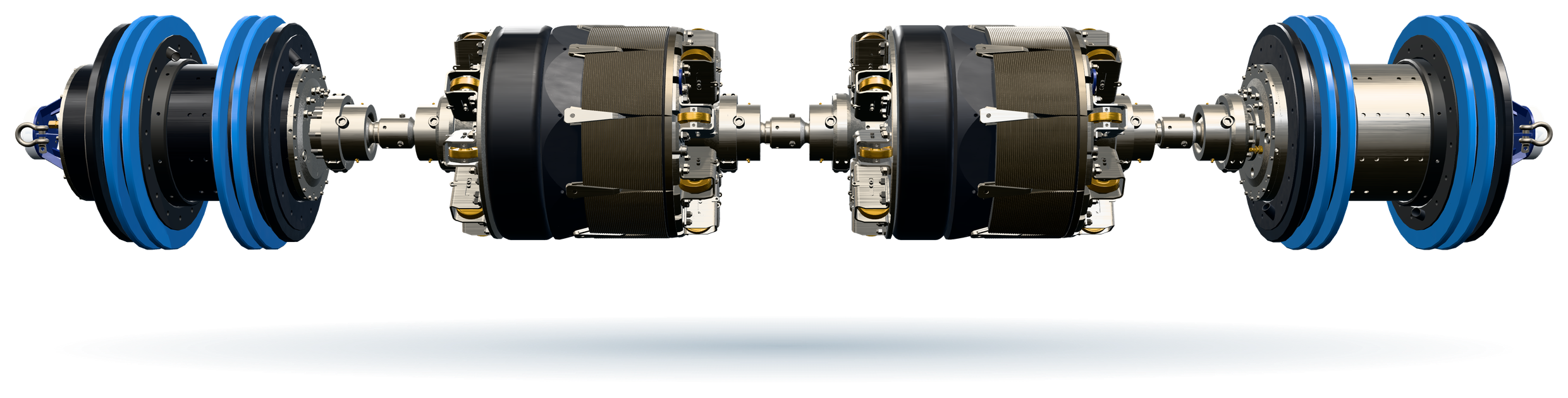
Standard four-module tool, true proportions
Backup module.
Secondary power and monitoring, with its own tracking and a contingency release.
Plug modules.
Each seals against the pipe wall and can hold the full differential pressure on its own. The space between them is monitored, and more plug modules can be added to a train for higher pressure differentials.
Control module.
Command, control and power, with a communication link to the surface.
Pigged in, set and verified from the surface, then pigged out. Nothing stays on the pipe, and no excavation is needed at the isolation site.
Setups
Set up for the job.
Every isolation is set up one of two ways: against a barrier you can already rely on, such as a blind flange or a double-block-and-bleed valve, or between two tools that bracket the work.

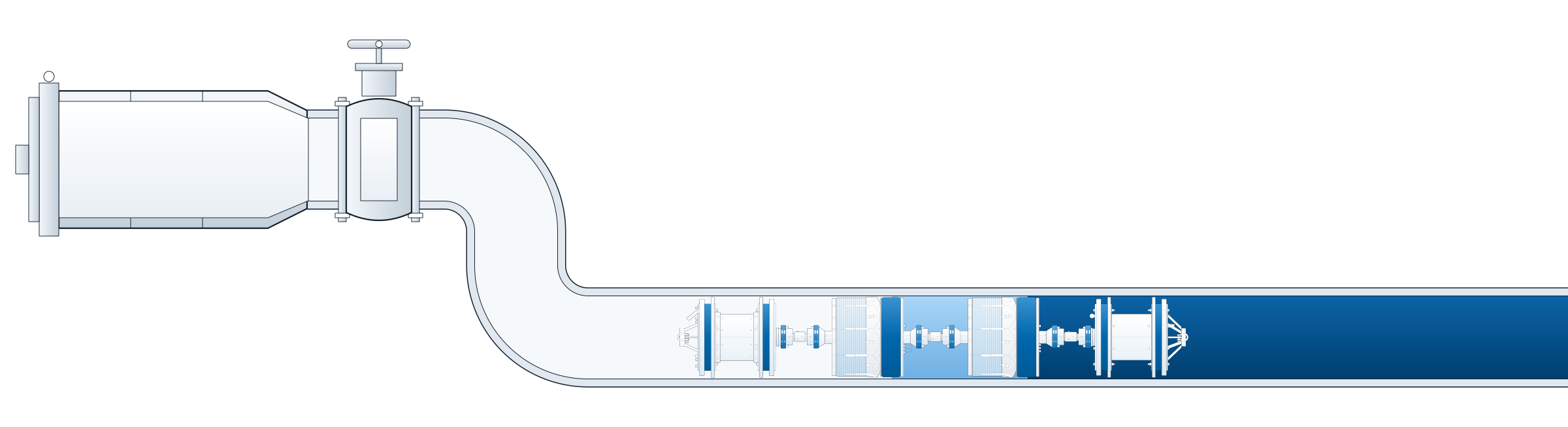
Example: trap maintenance. The tool is pigged a short way into the line and set just past the trap, holding line pressure in the mainline.
Barrier isolation
Isolate against a barrier.
One tool seals the line against a barrier you can already rely on, such as a blind flange or a double-block-and-bleed valve. Line pressure is held on one side while the work side is isolated and depressurized.
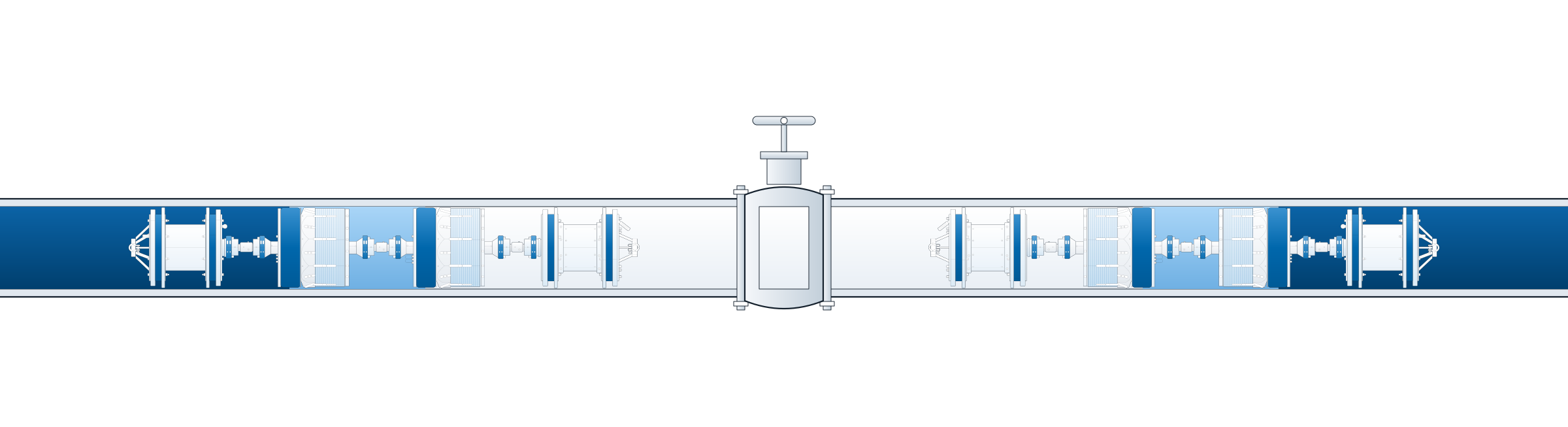
Example: a mainline valve replacement. The same setup brackets cutouts, repairs and tie-ins, and isolates test sections for hydrotesting.
Section isolation
Isolate a section between two tools.
Two tools bracket the work, one on each side, and hold line pressure on both sides of it. The section can be feet or miles long, and only that section is depressurized. For differential pressures above 1,480 psi, as in most hydrotests, tools can be stacked to step the pressure down. Afterward, the tools are pigged out, leaving nothing on the pipe.
Examples are illustrative. Every isolation plan is engineered to the specific line, its connections and site conditions.

Built for safety.
Two independent plug modules, each able to hold the full differential pressure, with the space between them (the annulus) monitored continuously, on site or remotely. The set is verified before work begins, and contingency release is built in.

Control from above grade.
Commands reach the tool by an extremely low frequency (ELF) signal through the soil and pipe wall, so it’s set, monitored and unset from above ground with no umbilical. Because it sets inside the pipe, it can isolate below grade with no excavation, no welding and no equipment left behind at the set point.

Matched to your line.
Liquid or gas, each tool is configured for the line it’s going into. Share your line data, including diameter, product and pressure, and we’ll show you how we’d isolate it.
How can we help?
Let’s talk about your line.
Tell us about the job and we’ll tell you how we’d isolate it.